

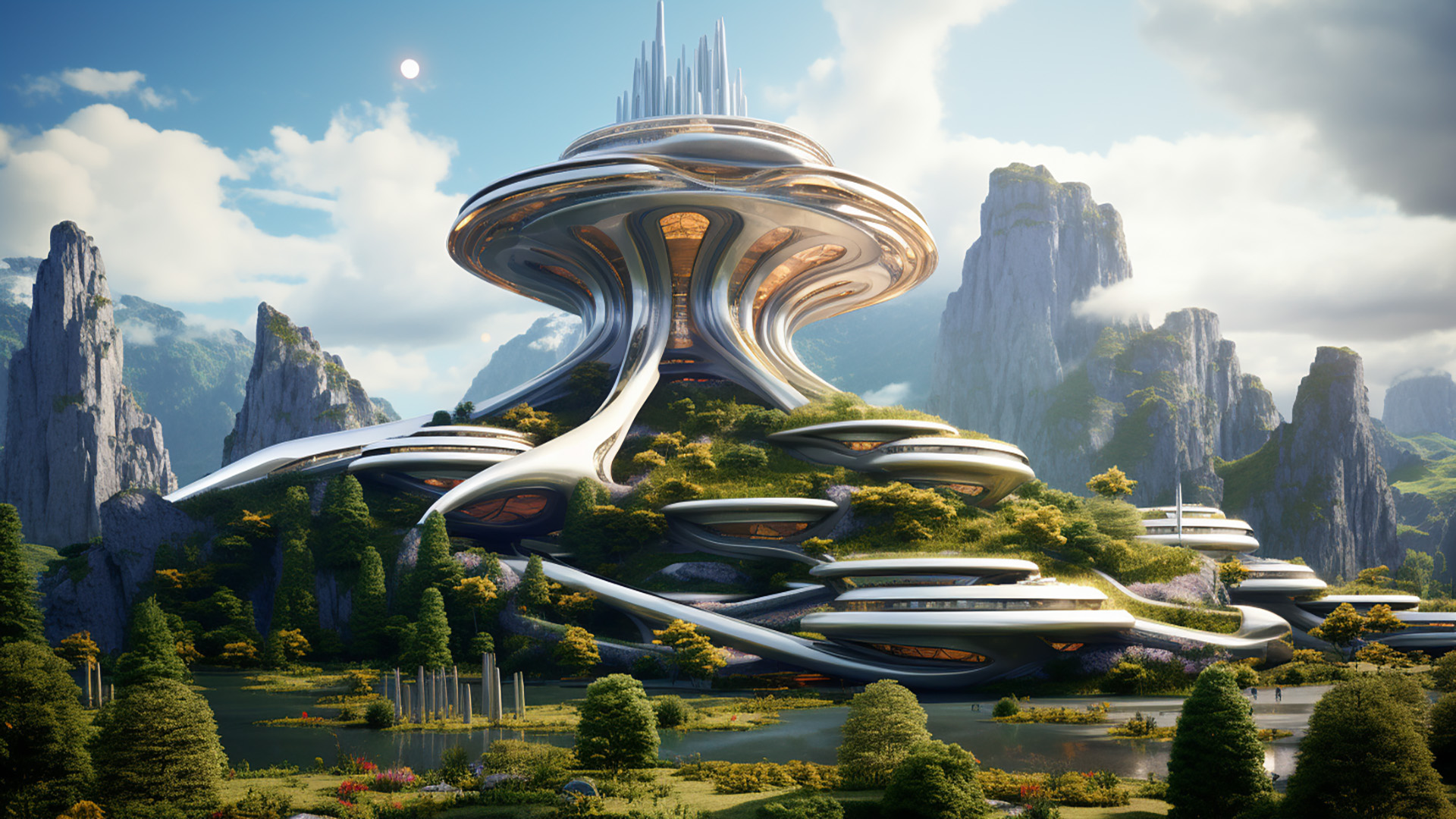
Architecture has always been a conversation between imagination and reality, a negotiation between what the human mind can dream and what the earth can hold. In this landscape of creativity, generative AI behaves like an invisible sculptor whispering possibilities into the ears of architects. It works like an ever-changing river that carves patterns, shapes, and sustainable pathways through a landscape of constraints. Instead of introducing the technology through definitions, it is easier to picture it as a companion artist, one that sees the world through mathematical eyes and paints through computational rhythms.
When Algorithms Learn to Dream in Shapes
Architects frequently describe design as an act of balancing beauty and function. Generative models amplify this balancing act by learning how forms evolve and how structures behave. They simulate possibilities the way a jazz musician riffs off a familiar tune, improvising without losing coherence. What emerges is not randomness but structured creativity, shaped by rules, past patterns, and context.
In large architectural firms, this imaginative force transforms how early concepts are drafted. Instead of dozens of manual iterations, architects can now guide an algorithmic collaborator that produces hundreds of viable forms within minutes. During such experiments, many learners who pursue gen AI training in Hyderabad experiment with small models to explore building silhouettes that seem to breathe and evolve with the surrounding environment.
Sculpting Sustainable Futures Through Data
Sustainable design is no longer a luxury. It has become a responsibility shared by everyone who shapes spaces for people and communities. Generative systems approach sustainability as a continuous puzzle. They observe how sunlight falls across surfaces, how wind travels through corridors, and how energy pulses through walls. Then they rearrange these interactions to find combinations that minimise environmental impact without compromising elegance.
Imagine designing a school building in a hot climate. The system can test thousands of façade textures, orientations, and airflow geometries to identify designs requiring the least artificial cooling. It feels as though the AI breathes with the building, sensing what will help the structure conserve energy. This synergy between data and aesthetics is what first draws many architects to computational design. It is also why some professionals attend gen AI training in Hyderabad to explore energy modelling and material optimisation through generative approaches.
The Beauty of Constraints and the Art of Algorithmic Exploration
Traditional design often begins with a blank sheet of paper. Generative design, however, begins with constraints. It thrives on boundaries the same way vines thrive when given a trellis. By defining structural limits, functional goals, environmental conditions, and aesthetic preferences, architects set the stage for algorithms to explore the unknown.
One example involves a city planning team reimagining an urban block. They may input constraints related to pedestrian flow, solar exposure, green cover, and vehicle movement. The model produces unexpected yet contextually meaningful blueprints. Some designs prioritise diagonal pathways to improve walkability, while others rotate structures slightly to capture natural light throughout the day. These outcomes do not eliminate the architect but expand their toolkit, allowing them to select and refine concepts grounded in logic as well as creativity.
Material Narratives Written Through Computation
Every material has a story. Wood expands and contracts. Concrete holds its strength through compression. Glass bends light in delicate patterns. Generative AI interprets these stories like a reader who understands both poetry and physics. It analyses the thermal, mechanical, and structural properties of materials and proposes futuristic combinations.
In real-world projects, this can lead to bio-inspired surfaces that mimic the cooling effect of termite mounds or structural lattices that echo the efficiency of honeycombs. These material explorations are not purely symbolic. They influence cost, reduce carbon footprint, and enhance durability. Over time, these computational interpretations create new design languages that blend traditional craftsmanship with digital precision.
Architectural studios increasingly rely on such algorithms to envision façades that respond dynamically to climate conditions. A façade may open, close, or change texture based on temperature or light intensity. This transforms buildings into living organisms that adapt instead of resist.
Collaborative Creativity Between Human Vision and Machine Logic
Even as algorithms take over repetitive calculations, the architect still remains the storyteller of spaces. The relationship between designer and model resembles a dance. The machine offers options, and the human selects the steps that resonate with cultural, emotional, and symbolic meaning.
For example, in museum projects, generative systems may propose spirals, waves, or fragmented forms. Yet only an architect can decide which form speaks the language of the collection it houses. In residential projects, the AI might generate multiple courtyard variations, but the architect chooses the one that feels intimate, warm, and liveable.
This collaboration does not replace intuition. Instead, it elevates it by grounding imagination in mathematical foresight. The result is a design flow that blends human experience with algorithmic clarity.
Conclusion: A Future Built from Computation and Creativity
Generative AI is guiding architecture into a future where cities breathe, buildings respond to their environment, and designs emerge from both intuition and computation. It moves like a silent partner, expanding what architects can imagine while remaining rooted in sustainable responsibility. The metaphor of an invisible sculptor is fitting because it works quietly, shaping possibilities, guiding materials, and inspiring forms that were once unreachable.
As architectural challenges grow more complex and sustainability becomes central to every decision, the presence of generative thinking will only deepen. Hybrid workflows, data-driven experimentation, and collaborative design systems will shape the next era of architecture. And in this evolving landscape, those who understand algorithmic aesthetics will hold the creative advantage. The future is not just about constructing structures but about crafting ecosystems where beauty and sustainability coexist in harmony.